Adults with childhood trauma show fewer CB1 receptors in PET scans
 Illustration
Survey or observational study
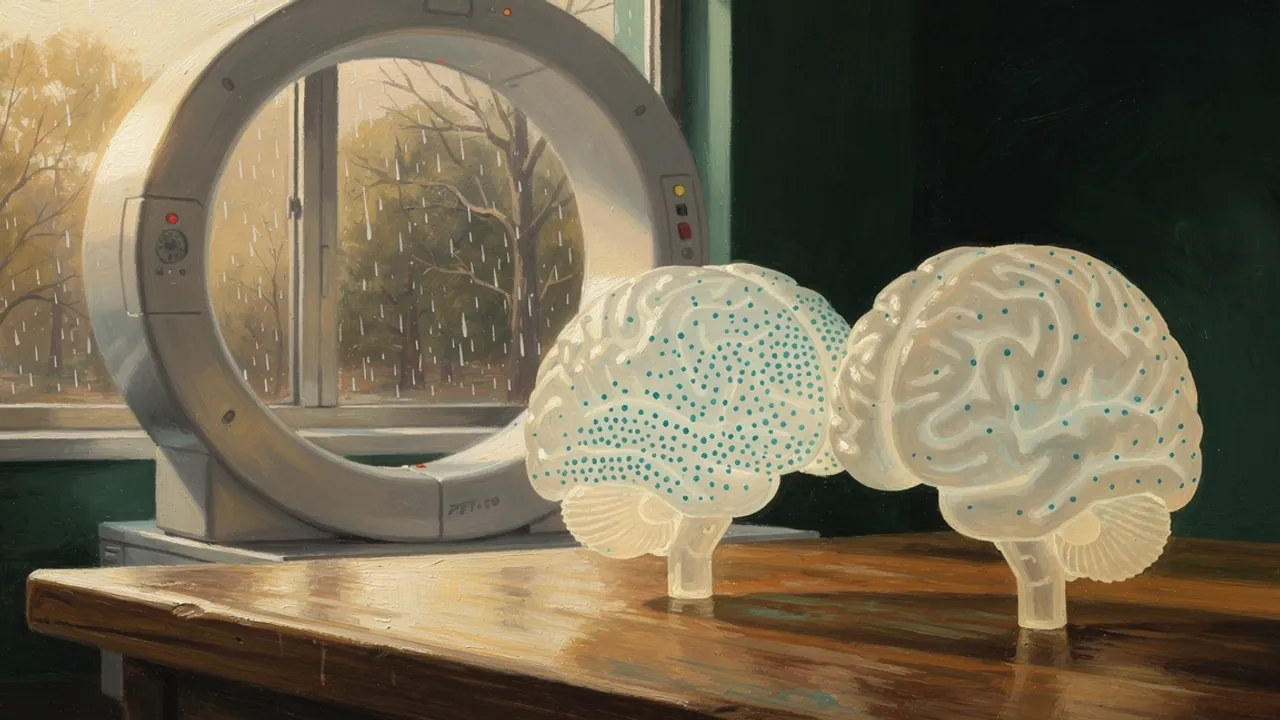
Researchers publishing in Molecular Psychiatry used PET brain imaging to compare 22 adults who had experienced childhood trauma with 22 matched adults who had not. The trauma group had lower availability of the CB1 cannabinoid receptor, both across the whole brain and in the amygdala and hippocampus. The frontal cortex showed no difference between groups. The authors call the result preliminary and say it suggests endocannabinoid dysregulation linked to childhood trauma.
About the study: Sample: 44 adults: 22 with childhood trauma and 22 matched controls · Funded by NIMH and NIDA (U.S. National Institutes of Health)
What we know
Adults with childhood trauma had lower CB1 receptor availability on PET than matched adults without trauma, across the brain overall and in the amygdala and hippocampus. The frontal cortex did not show a difference. PTSD, major depressive disorder, nicotine dependence and antidepressant use showed no effects.
What we don’t know yet
The authors call the result preliminary. They say future studies should replicate and extend it and examine how various trauma features affect the endocannabinoid system.
This is general information, not medical advice.
Our sources
- 1Europe PMC · Cannabinoid receptor type 1 availability in individuals with a history of childhood trauma: a positron emission tomography study.europepmc.orgRead at Europe PMC ↗
- 2PubMed · Cannabinoid receptor type 1 availability in individuals with a history of childhood trauma: a positron emission tomography study.pubmed.ncbi.nlm.nih.govRead at PubMed ↗
Drafted with AI assistance from linked sources; reviewed and approved by the editor.
Spot an error? Tell us.