

Raphael Mechoulam
Isolated and described THC, cannabis’s main active compound, in 1964.
Gaoni and Mechoulam, "Isolation, Structure, and Partial Synthesis of an Active Constituent of Hashish", J Am Chem Soc, 1964 Illustration
Evidence-based guides, California rules in plain English, plus videos, music and the local practitioners worth knowing. Written for first-timers, people coming back after years away, and daily users alike.
 Illustration
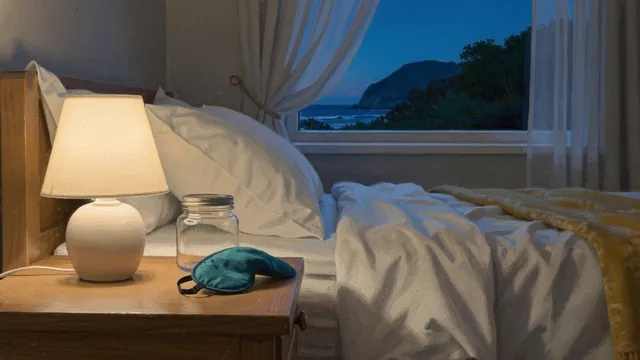
The 2017 National Academies review found moderate evidence that cannabis helps short-term sleep when pain, fibromyalgia, MS or sleep apnea disrupt it, and far less for everyday insomnia. Nightly THC builds tolerance, and stopping often brings a few weeks of restless sleep and vivid dreams.
Read up on timing, dose and your doctorSources National Academies of Sciences, The Health Effects of Cannabis and Cannabinoids (2017) · sleep medicine reviews · member reports
Quiz · 60 SecondsFive questions about the effects you like. Results save to your profile and improve your matches.
Take the quizAyahuasca, psilocybin, MDMA, ibogaine, mescaline and the obscure: the newest science, the law state by state, trials to watch, and what the community is discussing.

 Illustration
Moderate evidence of short-term help when pain, MS or sleep apnea disrupt sleep. Weak evidence for plain insomnia. Nightly use builds tolerance.
Source National Academies (2017)
 Illustration
Strongest for nerve pain, with small to moderate short-term relief for some people. Balanced THC:CBD products caused fewer side effects than high-THC ones, and dizziness was the most common.
Sources National Academies (2017) · AHRQ living review (2022)
 Illustration
In a University of Chicago trial, 7.5 mg THC eased stress during a mock job interview while 12.5 mg made it worse. CBD shows promise in small studies; high THC can trigger anxiety.
Source Childs, Lutz & de Wit, Drug and Alcohol Dependence (2017)
 Illustration
Many people say certain strains feel energizing, but research consistently finds THC impairs short-term memory and attention while you're high. Plan focused work before, not after.
Source National Academies (2017)
 Illustration
Effects start 30 minutes to 2 hours after eating and can take 4 hours to fully hit. Start with 2.5–5 mg and wait before taking more; California caps edibles at 10 mg per serving.
Sources New Mexico Dept. of Health · Cal. Code Regs. tit. 4 §17304
 Illustration
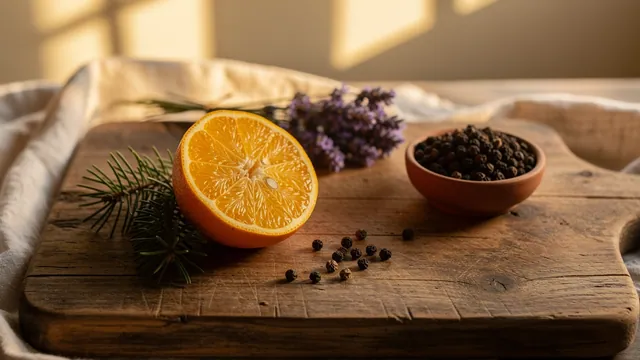
Terpenes give each strain its smell: earthy myrcene, citrus limonene, piney pinene, floral linalool, peppery caryophyllene. Claims that they steer your high are still mostly unproven.
Sources Peer-reviewed terpene reviews · licensed lab test results
Adults 21 and older can buy, carry and use cannabis under Prop 64 (2016). Medical patients 18+ can buy with a doctor's recommendation.
Source Prop 64 · CDPH
Up to six plants per home, out of public view and locked. Counties and cities can add their own rules, so check yours before you plant.
Source Prop 64 · your county planning department
Edibles can hold no more than 10 mg THC per serving and 100 mg per package.
Source Cal. Code Regs. tit. 4 §17304
Look for Total THC (THC plus THCA), the packaging date, the batch ID and the triangle universal symbol. The bold government warning is required on every package.
Source California Dept. of Cannabis Control
Apply at your county health department with a doctor's recommendation; fees run up to $100 ($50 max on Medi-Cal). Cardholders skip state sales tax on medical purchases, and a card lasts up to one year.
Source CDPH MMIC Program
No smoking or vaping anywhere tobacco is banned: streets, parks, beaches with smoking bans, businesses. Never within 1,000 ft of a school or youth center while kids are present.
Source SLO County · state law
Average THC in seized cannabis rose from about 4% in 1995 to about 16% in 2022. If you're coming back after years away, a "normal" amount is now a big one.
Source NIDA Potency Monitoring Program
Wait at least 6–8 hours after an edible before driving or swimming, longer if you still feel it. Driving high is a DUI in California.
Sources New Mexico Dept. of Health · CA Vehicle Code
About 1 in 5 adults aged 50–80 used cannabis last year. Start at 1–2.5 mg, skip smoking, watch for dizziness and falls, and tell your doctor about your medications.
Sources National Poll on Healthy Aging (2024) · Harvard Health
Alcohol strengthens a high, and cannabis can interact with sedatives, blood thinners and other prescriptions. Ask a pharmacist before you combine them.
Source Harvard Health
The labels describe plant shape more than effects. Your dose, the THC level and how you take it predict your high better than the label.
Waiting is the key. Most bad edible experiences come from taking a second dose before the first one kicks in, which can take up to 2 hours.
Average potency has roughly quadrupled since 1995, according to federal testing data.
Top Discover reads plus weekend events, every Friday once the newsroom opens.
Join free to get it firstYour path choice tailors what you get.
Isolated and described THC, cannabis’s main active compound, in 1964.
Gaoni and Mechoulam, "Isolation, Structure, and Partial Synthesis of an Active Constituent of Hashish", J Am Chem Soc, 1964Harvard psychiatrist whose 1971 book Marihuana Reconsidered challenged the case against cannabis.
"Harvard, Marijuana and Me" by Lester Grinspoon, on his own siteHis 1957 LIFE article brought the Mazatec mushroom ceremony to a mass audience.
"Seeking the Magic Mushroom", LIFE, May 13, 1957Writer and speaker on psilocybin and plant hallucinogens; his and his brother Dennis’s papers are held at Purdue.
Dennis and Terence McKenna papers (MSP 213), Purdue University Archives and Special CollectionsFirst reported DMT’s effects in people, in 1956.
Szára, Experientia, 1956 (PubMed record)Teacher and author of Be Here Now; his talks are kept by his foundation.
Ram Dass (Love Serve Remember Foundation)The Sandoz chemist who first made LSD and discovered its effects in 1943.
Albert Hofmann correspondence and other materials (MSP 89), Purdue University Archives and Special CollectionsHarvard psychologist turned counterculture figure; his papers are at the New York Public Library.
Timothy Leary papers (MssCol 18400), New York Public LibraryPsychiatrist whose early LSD research shaped psychedelic therapy; his papers are at Purdue.
Stanislav Grof papers (MSP 1), Purdue University Archives and Special CollectionsCalifornia voters made medical cannabis legal under state law.
Text of Proposition 215 (1996 ballot pamphlet)The first new US study of a psychedelic in people in a generation.
Strassman and Qualls, Arch Gen Psychiatry, 1994, part I (PubMed record) Part II (PubMed record)Chemists and authors of PiHKAL and TiHKAL; their research is carried on by the institute in Alexander’s name.
Alexander Shulgin Research InstituteLed the Johns Hopkins psilocybin research that reopened the field.
Johns Hopkins Center for Psychedelic and Consciousness ResearchVolunteers rated a single psilocybin session among the most meaningful experiences of their lives.
Griffiths et al., Psychopharmacology, 2006 (PubMed record)Mapped how ayahuasca acts in the human body.
Riba et al., J Pharmacol Exp Ther, 2003 (PubMed record)California voters legalized adult-use cannabis.
Proposition 64: title, summary and analysis (2016 voter guide)An open-label study of psilocybin with psychological support for treatment-resistant depression.
Carhart-Harris et al., Lancet Psychiatry, 2016 (PubMed record)Oregon voters created the first state program for supervised psilocybin services.
Oregon Psilocybin Services (Oregon Health Authority)